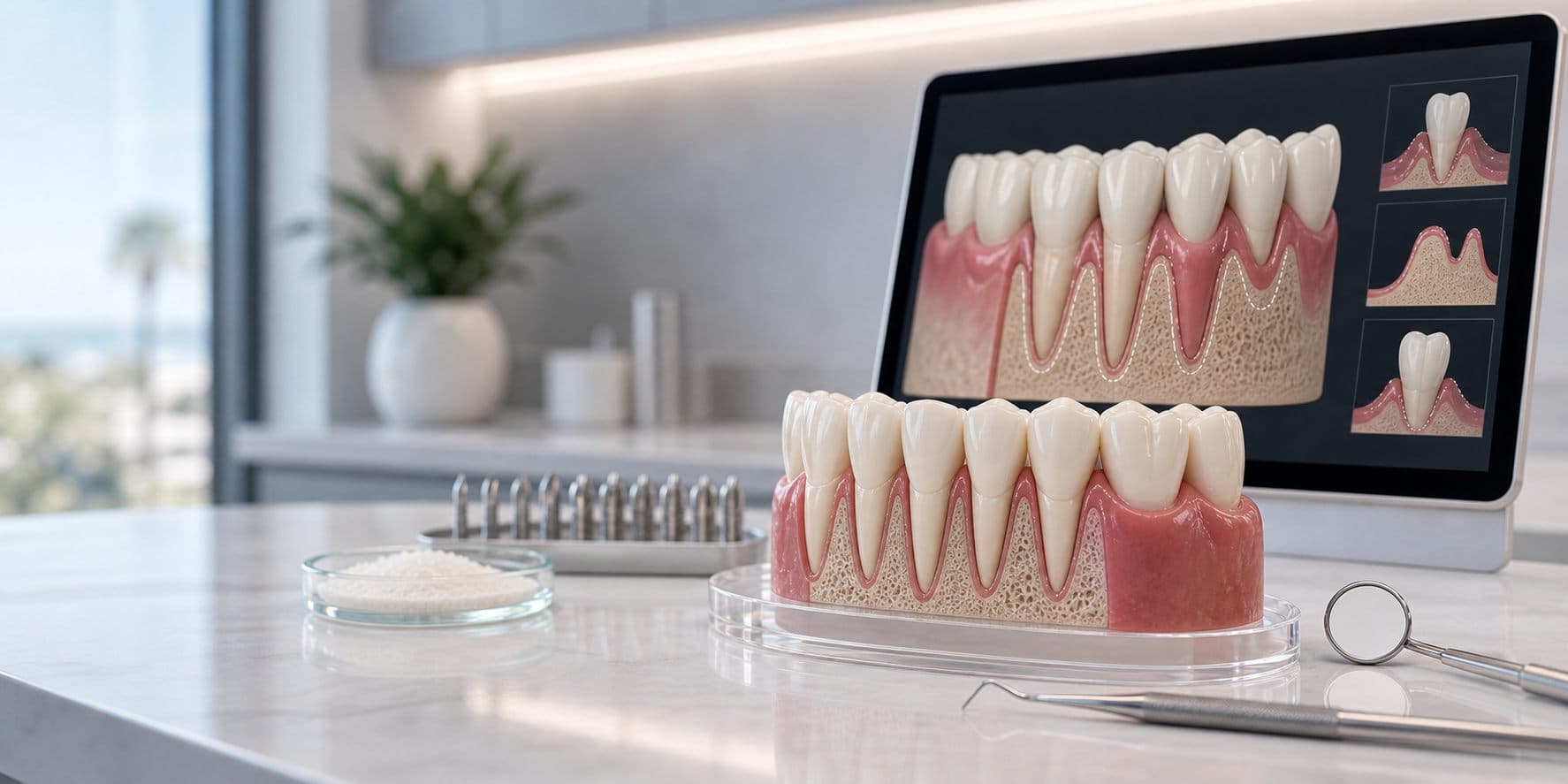
Gum Grafting
Periodontal Care
About This Service
Gum recession can affect comfort, appearance, and long-term tooth protection. At South Bay Dental Surgery Center in Torrance, we evaluate exposed roots, sensitivity, uneven gumlines, and areas that are hard to keep healthy.
Gum recession can expose root surfaces and make teeth look longer, feel sensitive, or become harder to keep healthy. Gum grafting adds or repositions tissue to protect exposed areas and improve the stability of the gumline. The exact approach depends on the amount of recession, tissue thickness, brushing habits, bite forces, and whether periodontal disease is present.
Why gums recede
Gum recession may be related to periodontal disease, thin tissue, aggressive brushing, tooth position, clenching, bite forces, or prior dental treatment. Identifying the cause helps protect the graft and reduce the chance of future recession.
Root coverage and tissue support
Some grafts are planned primarily to cover exposed roots and reduce sensitivity. Others are designed to thicken the tissue, improve long-term stability, or support planned restorative and implant treatment.
The Process
Recession Evaluation
We evaluate recession depth, root exposure, tissue thickness, brushing habits, bite forces, and periodontal health.
Graft Planning
We discuss the grafting approach, expected healing, tissue source, and whether root coverage is predictable for your case.
Tissue Grafting
Gum tissue is added or repositioned to protect the affected area and support a healthier gumline.
Healing & Maintenance
Follow-up visits monitor healing, review home care, and help protect the grafted area long term.
Common Questions
A gum grafting consultation can help determine whether root coverage, tissue thickening, bite adjustments, or home-care changes are the most appropriate next step.
Benefits
- Covers exposed roots
- Reduces sensitivity
- Protects vulnerable teeth
- Improves gumline symmetry